SANO BUSINESS OPERATING SYSTEM
The operating structure behind the work.
Sano connects organizational responsibility, recurring workflows, and operational visibility so growing organizations can run important work with clearer ownership and fewer gaps.
THE OPERATING FOUNDATION
Structure the organization before managing the work.
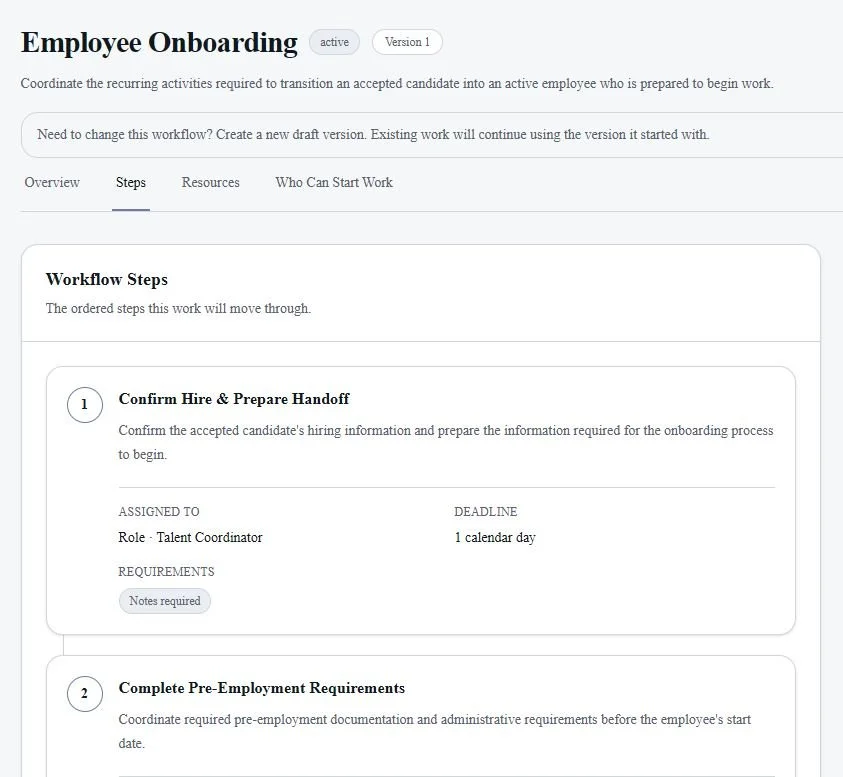
Sano starts with the structure behind operational work: the organization, the roles people hold, and the responsibilities those roles carry. That foundation gives recurring work a clear place to begin and makes ownership visible before a workflow ever starts.
01 — Organization
The operating context that connects people, structure, and work.
02 — Teams
Organizational groupings that bring related people and work together.
03 — Roles
Positions that define where ongoing accountability sits.
04 — Responsibilities
Persistent areas of ownership attached to Roles.
05 — People
Members assigned to Roles and connected to the responsibilities they carry.
STRUCTURED WORK
Turn recurring processes into work people can actually follow.
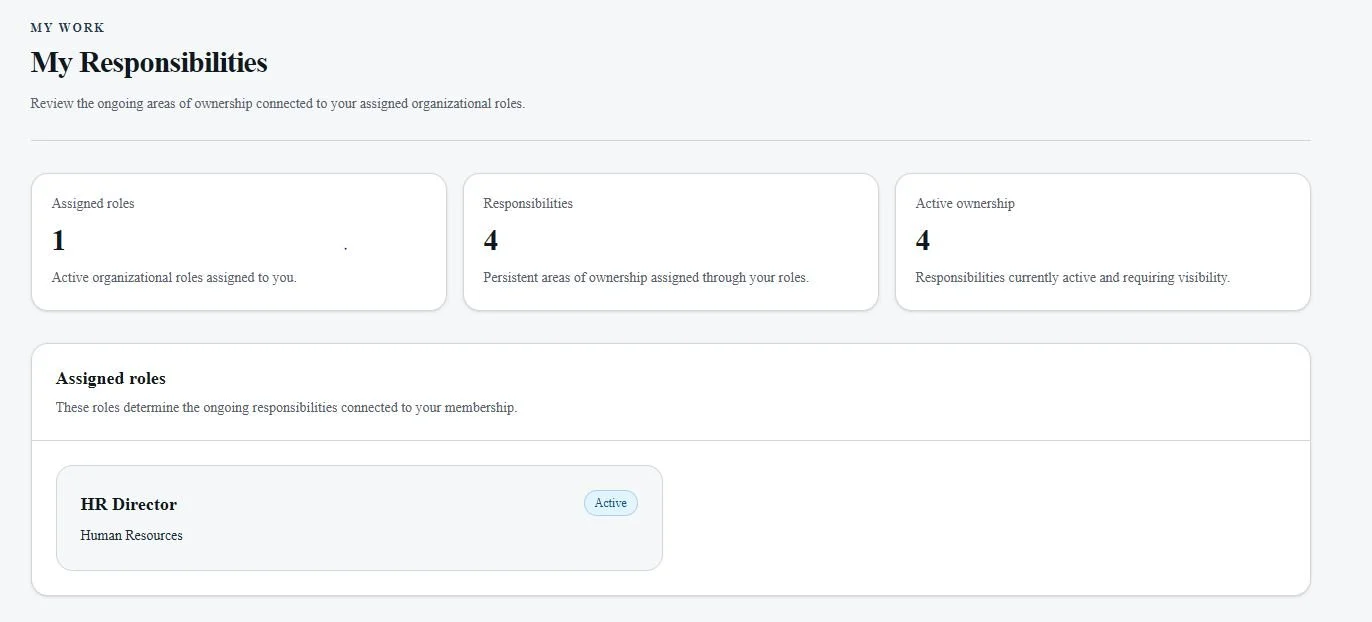
Sano workflows define how recurring operational work moves from start to finish—with clear stages, ownership, requirements, and timing built into the process.
Defined stages
Give recurring work an ordered path instead of relying on people to remember what happens next.
Clear ownership
Connect stages to the Roles responsible for moving the work forward.
Requirements
Make important information or completion requirements visible at the point they're needed.
Timing
Set stage-level expectations so due dates follow the structure of the workflow.
WORK EXECUTION
Keep work moving without turning Sano into a task board.
When operational work begins, Sano carries the workflow structure into execution—showing where the work is, who owns the current stage, what is due, and what needs to happen next.
Start from a defined process
Launch recurring work from an established workflow so the operating structure is already in place.
Know the current step
See where each work item is in its process and what must happen before it moves forward.
Keep ownership visible
Current ownership follows the workflow instead of depending on manual reassignment or follow-up.
Preserve the history
As work progresses, Sano keeps the execution trail so the organization can understand how the work moved.
OPERATIONAL VISIBILITY
See where attention is needed without chasing updates.
Sano brings active operational work into view so leaders can understand what is moving, what is approaching a deadline, and where intervention may be needed.
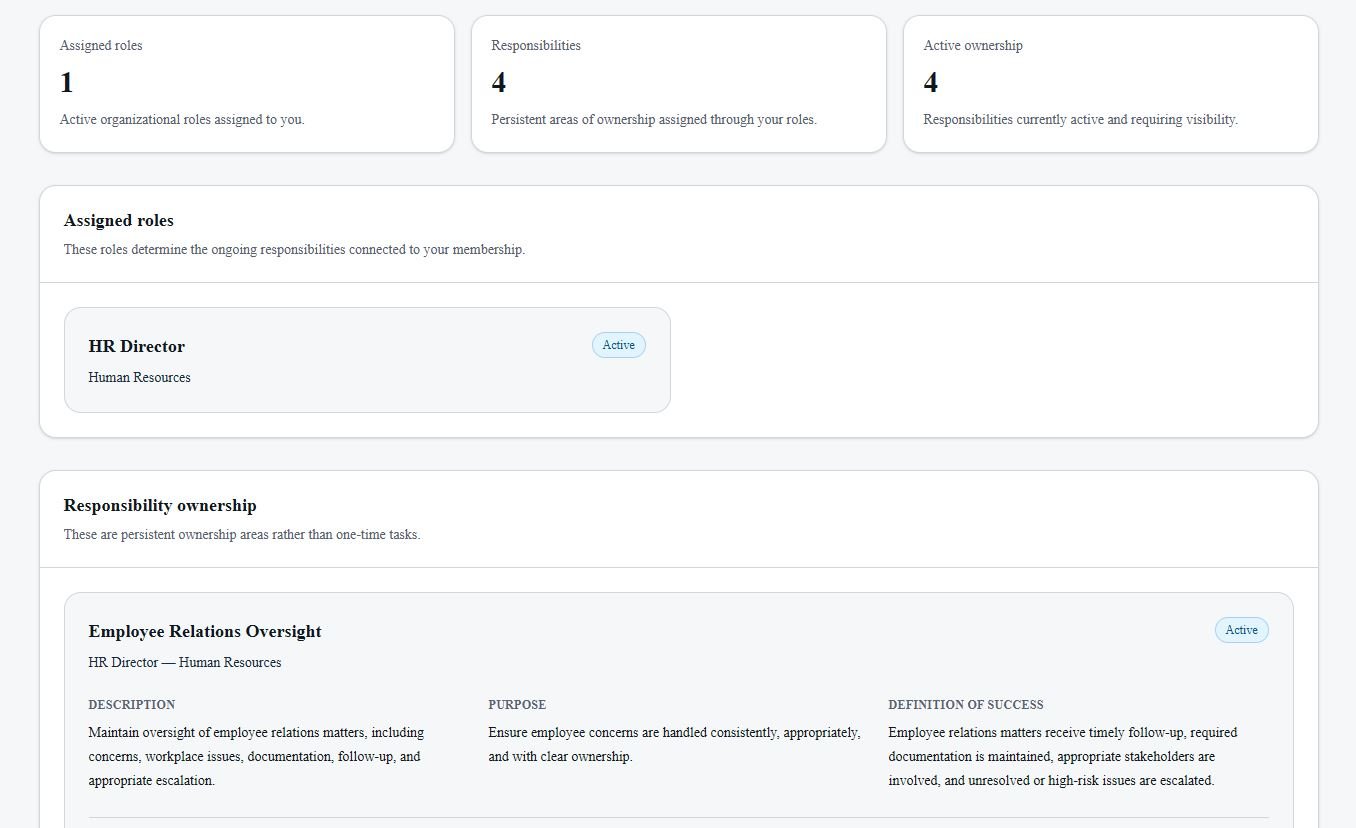
Work in motion
See active operational work across the organization.
Attention points
Surface overdue, approaching, or long-running work that may require review.
Ownership context
Understand who or which Role currently owns the work.
Leadership perspective
Focus on operational signals without monitoring every individual action.
CONTINUOUS IMPROVEMENT
Build a clearer picture of how work actually moves.
As operational work runs through Sano, the organization builds a history of execution—creating better context for understanding delays, handoffs, recurring friction, and opportunities to improve the way work is structured.
Execution history
Preserve a record of how operational work moved through its workflow.
Handoffs and timing
See where work changed ownership and how progression unfolded over time.
Recurring friction
Create the operational context needed to recognize where processes repeatedly slow down or require intervention.
Better process decisions
Use evidence from real execution to inform how workflows and operating structures should evolve.
BUILT FOR OPERATIONS
More than a place to manage tasks.
Sano is built around the operating structure behind the work—not just a list of things to complete. It connects ongoing responsibility, repeatable processes, active work, and leadership visibility in one operating system.
Not a task manager
Tasks can show what someone needs to do. Sano also preserves the organizational responsibility and workflow structure that explains why the work exists and where ownership sits.
Not a project-management clone
Projects are useful for temporary initiatives. Sano is designed around recurring operational work that organizations need to run consistently.
Not an HRIS
Sano can represent people, Teams, Roles, and Responsibilities, but its purpose is to coordinate operational ownership and execution—not manage payroll, benefits, or employee records.
Not an employee-monitoring tool
Sano surfaces the state of operational work and where attention may be needed. It is designed for operational visibility, not surveillance or individual activity tracking.
SEE SANO IN PRACTICE
See how Sano could fit your operating environment.
Explore how Sano can bring clearer ownership, more consistent operational work, and better visibility to the way your organization runs.